Mind Maps
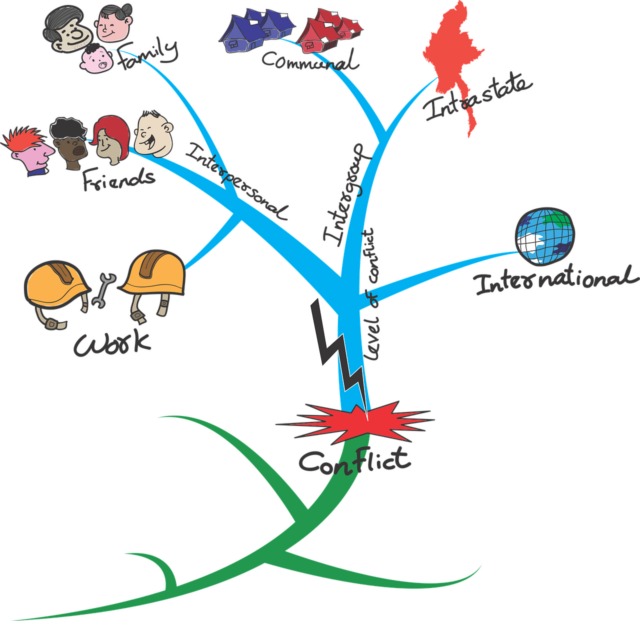
Purpose
A mind map is a visual brainstorming and organizing tool that helps structure complex problems in a non-linear way. Mind maps produce visual representations of how individuals or groups think about a topic of interest. These diagrams have two core elements: the ideas that are central to the topic or problem at hand, and the lines representing and describing the various connections between these ideas. Whenever researchers think about a problem, develop a plan, or make a decision, they are putting a series of thoughts together, which can be put together visually in the form of a mind map.
Think of it as drawing a tree, where the central problem is the trunk, and related ideas branch out like limbs and twigs. It is used to visually represent the various aspects of a problem, such as contributing factors, stakeholders, potential solutions, and their interrelationships. By visually mapping these connections, you can identify patterns, reveal hidden or implicit relationships, and ensure that a wider range of relevant aspects are considered. This helps in developing comprehensive interventions that address the problem from multiple angles, fostering creative thinking and collaborative problem-solving.
| Uses | Limitations |
|---|---|
|
|
When to Utilize
Mind maps are particularly useful for dealing with a complex problem that has many interconnected factors and you need a way to visually explore and organize your thoughts. They’re ideal during the initial stages of problem structuring, when you’re trying to brainstorm ideas, identify relationships, and gain a holistic understanding of the issue.
Mind maps can be employed by an individual or group to help sort through ideas and develop an understanding of key concepts. By presenting these key actors and relationships in a visual manner, the individual or group is better able to communicate, remember, and critique them. These charts can also be useful in correspondence between teams, such as in background reports, briefings, or infographics.
Resources
Anne-Laur Le Cunff, The Science of Mind Mapping: a Visual Way to Make Sense of the World
Return to methods Previous Post
 Next Post
